You may have heard of the rotator cuff or experienced a rotator cuff tear, but what actually is it?
What is the rotator cuff?
The rotator cuff is a group of muscles and tendons located in the shoulder, which assist in providing strength and stability to the joint. It consists of 4 muscles, the supraspinatus, infraspinatus, teres minor and subscapularis. The muscles start from the scapula (shoulder blade) and insert onto the humerus (the upper arm), wrapping around the head of the bone to increase stability.
What is the role of the rotator cuff?
The primary role of the rotator cuff is to stabilise the glenohumeral joint — the ball-and-socket joint of the shoulder — and assist with rotation and lifting movements of the arm. The glenohumeral joint is the large ball and socket joint in your shoulder, where the head of the humerus (arm bone) sits in the shallow socket- the glenoid fossa of the scapula (shoulder blade). This shallow socket allows the joint to have a wide range of motion, enabling us to perform movements such as reaching overhead, however without the reinforcement of the rotator cuff muscles, the joint would lack stability.
Injuries to the rotator cuff:
Injuries to the rotator cuff are quite common and often present in clinic. The rotator cuff can be injured in a number of ways, these include:
Tears – usually occur when there has been some form of trauma to the muscles e.g. a fall or excessive force, such as while playing sport, or falling on an oustretched hand. This means that the muscle fibers have torn, and this can be a partial tear, or a complete rupture.
Tendinopathies – are often due to repetitive overuse and commonly seen in people with jobs or sports that involve frequent overhead activity.
Impingement – can occur when there is rubbing or catching of the muscles on the bones of the shoulder. Often this is due to weakness through the rotator cuff or surrounding muscles and may lead to inflammation in the shoulder joint.
Rotator cuff muscles are also commonly impacted by aging which can result in degeneration of the muscles- making them more susceptible to tears and/or tendinopathies.
Common symptoms of rotator cuff injuries
Depending on the type and location of a a rotator cuff injury, will depend on the symptoms. However the most common signs and symptoms include:
– Shoulder pain, especially when lifting the arm or reaching overhead
– Weakness in the shoulder, particularly when trying to lift or rotate the arm
– Pain at night, which may worsen when lying on the affected side
– Limited range of motion or stiffness in the shoulder
– Difficulty performing daily tasks, like brushing hair, putting on a shirt, or reaching behind your back.
How can an osteopath help?
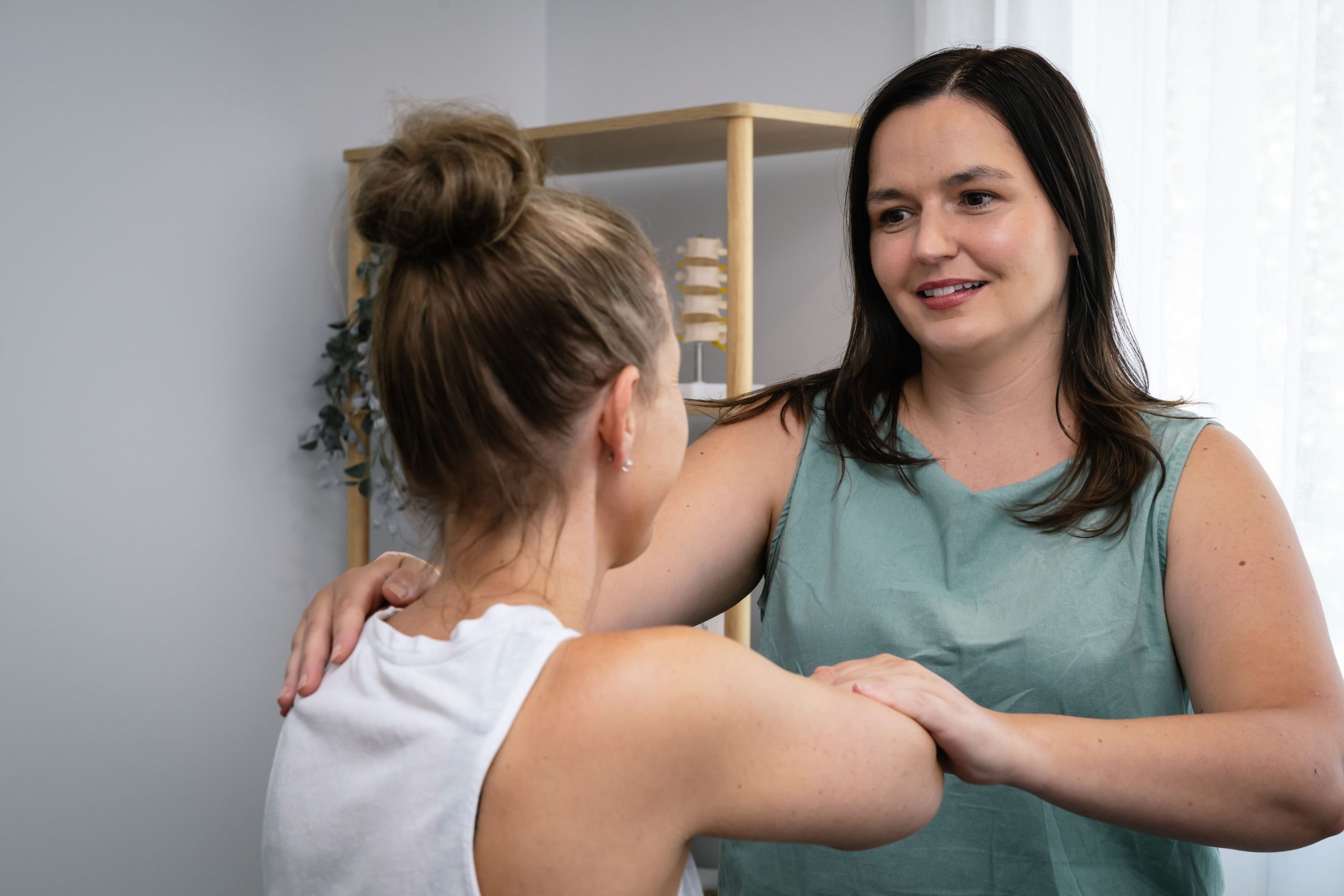
Shoulder pain is a common preentation in our clinic. Gven the complex nature of the shoulder joint, getting an accurate diagnosis from a professional is essential in guiding the appropriate treatment and managment. One of the most important factors with rotator cuff injuries is identifying the initiating and aggravating activities. Your Osteopath will formulate a plan with you to help modify or avoid these activities and will prescribe you exercises to assist in correcting any poor movement patterns that caused the injury in the first place. Osteopathic management also includes manual therapy to the shoulder and surrounding areas and your osteopath can refer you on for imaging if required.
If you are experiencing shoulder pain or dysfunction and would like further information please don’t hesistate to contact the clinic or book in now to see one of our osteopaths.